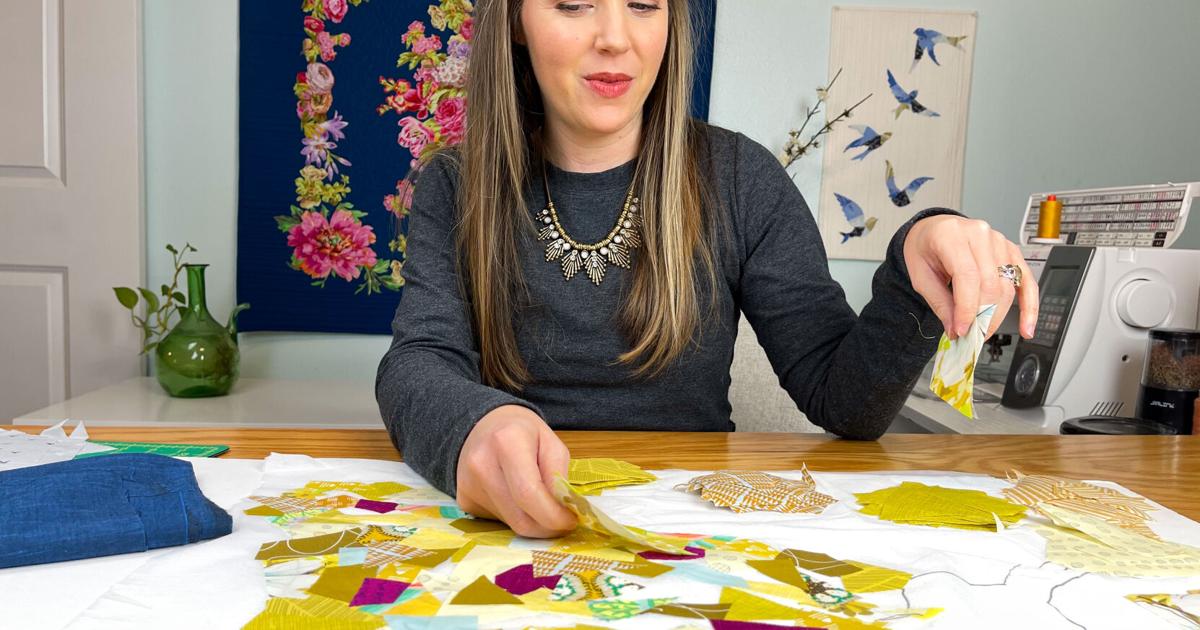
Here’s one good result born from the pandemic. Many more people started using their hands and hearts to make crafts at home.
Those would-be crafters who used to say “If I only had the time, I’d like to take up (fill in the blank: needlepoint, pottery, quilting, candle making, basket weaving, woodworking, painting, or making macrame wall art from bicycle tires and pantyhose) got their chance.
As folks figured out creative ways to keep themselves and the kids entertained during lockdown, the pursuit of small crafts became big business.
Crafts supply stores such as Hobby Lobby and Michaels reported unexpectedly high sales during the pandemic, and their projections for 2022 remain strong.
In 2020, Etsy, an online marketplace for handmade items, more than doubled its revenues, and for the first nine months of 2021, its gross merchandise sales were up 39% over the same period the previous year, according to Forbes.
Even smaller craft businesses felt the boost. “Our business tripled in 2020,” said Shannon Brinkley, a fabric designer who runs The Meander Guild, an international online forum where quilters gather to explore quilt-making styles from around the world and to develop their crafts.
“When people were stuck at home, they tried to think of new things to do, and creative sparks took root,” said Jeff Herman, editor in chief at Lawnstarter, an app that lets users book lawn and outdoor services. This month, his company released its “Best Cities for Crafting” report.
“We’ve all seen the stories about how many people spent the extra time and cash they had on hand during the pandemic on home improvement,” Herman said.
“But fewer talked about how they used the time and cash to improve their homes and their quality of life through crafting. That is showing up as a huge trend.”
Indeed, as a society we went from wringing our hands to wringing tie-dye T-shirts and from knitting our eyebrows to knitting afghans. Creating crafts not only helped us pass the time in isolation and took our minds off the problems of the world, but also made our homes look better and sometimes brought in some dough.
Kat Kennedy is a good example. “I’ve always enjoyed doing crafts,” she said. But when the pandemic hit, the 34-year-old mother took up finger knitting, a technique that does not use needles. She started churning out blankets with a vengeance.
“Before the pandemic, I’d probably made a total of three blankets in my life,” she said. Since COVID, she’s made 21. Several grace her home. Some she’s sold. Others she’s given as gifts or donated to the homeless.
Her boyfriend, Daniel Hardy, also caught craft fever. After Kennedy dragged him to a few thrift stores, he took an interest in old furniture and started picking up a few worn but well-made pieces, including China cabinets, cedar chests and dressers, and taught himself how to sand, refinish and restore them by watching YouTube videos. He now sells his renovated furniture.
The couple does it all in the living area of a two-bedroom, 925-square-foot apartment. Kennedy knits in an oversized armchair, while Hardy works nearby in a portion of the dining room they’ve converted into a workshop.
According to the “Best Cities for Crafters” survey, the top five are New York, San Francisco, Miami, Seattle, and Patterson, N.J. But more important than the rankings is knowing what to look for in your community to help you achieve crafting success. Here are the qualities researchers found that can help fire up crafters’ glue guns:
• Access to materials: Having a lot of craft supply stores per square mile helped boost a city’s ranking, as did having an abundance of hardware, fabric and thrift stores.
• Craft community: Cities where a lot of local artists participated in their local Artists Sunday — an art-shopping event held every November in cities across America — ranked high, along with those that had a lot of craft meet-up groups.
“Having a concentration of artists nearby is important for both inspiration and networking,” Herman said.
• Educational opportunities: The more art classes and craft workshops a town offers and the more schools that provide art and craft courses, the greater the opportunity for artistic growth and enrichment, and the higher a city scored in the rankings.
• Art events: A final measure of a city’s craft potential is how many art events, including craft fairs and art festivals, a city hosts each year. Whether you tap into a creative community online or in person, artists do better when they engage with other artists.
Join me next week as we talk about what every craft room should have.
Marni Jameson is the author of six home and lifestyle books, including “Downsizing the Family Home – What to Save, What to Let Go.” Reach her at marnijameson.com.